

What is a centrifuge? - Tengyi Technology
What is a centrifuge?
A centrifuge is a device that generates centrifugal force by spinning at high speed, which can separate different components in a mixture according to their density differences. During this separation process, heavier materials are pushed to the outside of the container, while lighter materials are concentrated in the center of the container. This technology has wide applications in many fields, especially in medicine, chemistry, biology and industrial production.
How a centrifuge works
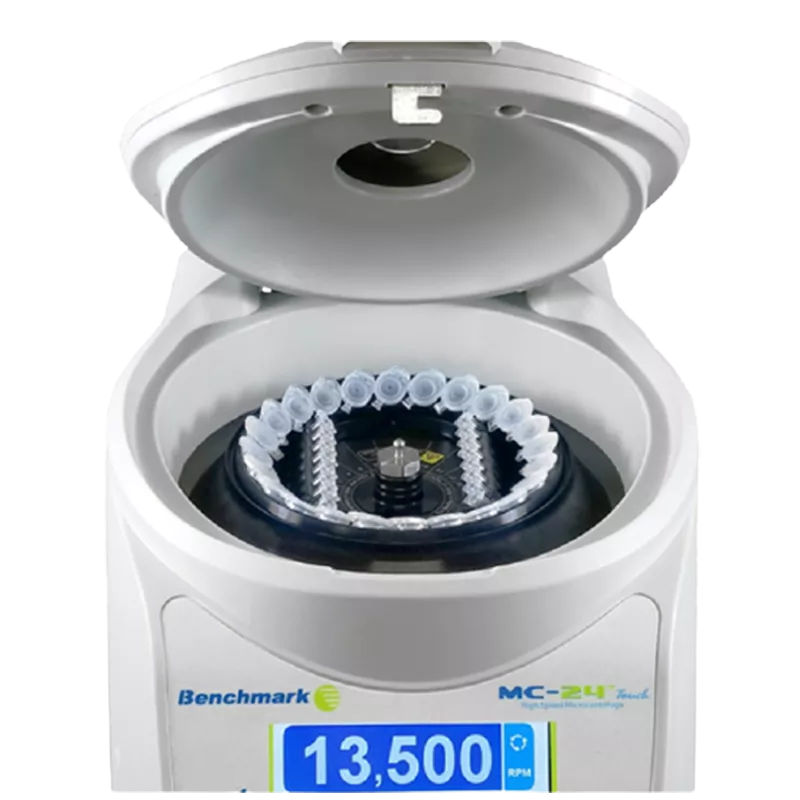
The core principle of a centrifuge is to use rotational motion to generate centrifugal force. When a sample is placed in the centrifuge's rotor and begins to spin, the material surrounding the rotor is subject to an outward force. Depending on the density of different substances, denser components will be pushed to the periphery of the centrifuge tube, while lighter components will remain in the middle or inside, thus achieving stratified separation.

The basic structure of a centrifuge
A centrifuge generally consists of the following main parts:
Rotor: This is the part that holds the sample. It spins at high speed and applies centrifugal force to the sample. Depending on the application, rotors come in different shapes and sizes.
Motor & Drive System: Provides the power required for the rotor to rotate. Typically, modern centrifuges use brushless motors, eliminating the need for routine maintenance.
Control System: Used to set and adjust the centrifuge's speed, time, temperature and other parameters. Some high-end equipment also has a memory function to save settings.
Safety Devices: including centrifugal cover, safety door lock, imbalance detection, overspeed protection, overheating protection and other facilities, which can ensure the safety of users.
Types of Centrifuges
There are different types of centrifuges according to different application requirements:
Conventional centrifuge: The most basic type, usually suitable for separating liquids and solids, with a wide range of processing and a rotation speed of about 6000rpm.
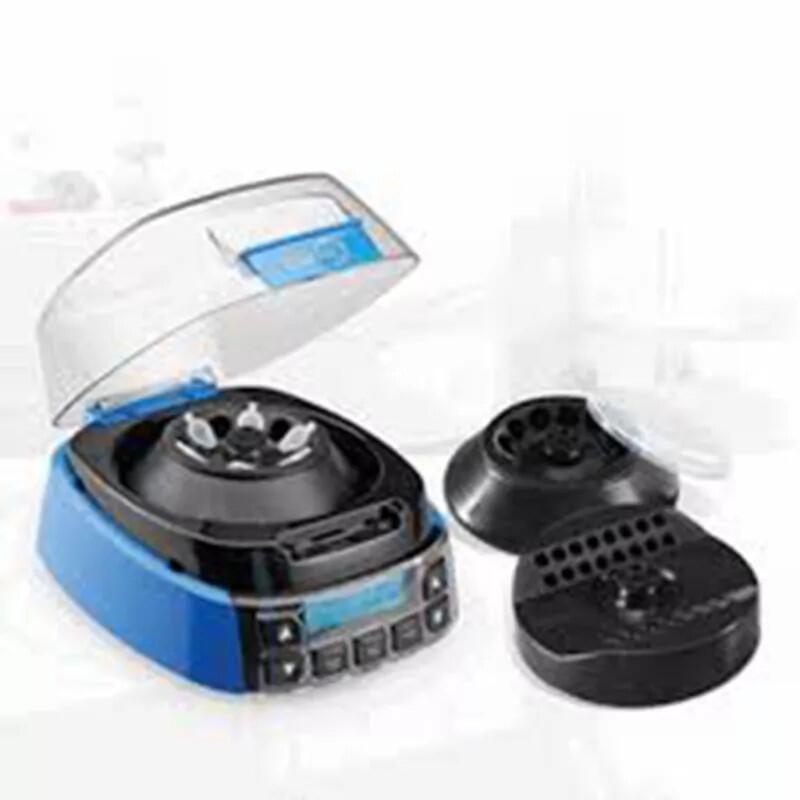
Microcentrifuge: Designed specifically for processing small samples, these centrifuges have a high speed and are usually used to separate trace samples such as cells and DNA.
Ultracentrifuge: It has a very high rotation speed and can be used to separate tiny particles, such as viruses, proteins, etc.
Clinical laboratory centrifuge: mainly used for testing samples such as blood and urine. It has a low rotation speed and can usually process multiple samples.
Large capacity centrifuge: specially designed for processing large volume samples, suitable for production processes or occasions where large amounts of samples need to be processed.
Hematocrit centrifuge: specially designed to measure the proportion of red blood cells in the blood.
Continuous flow centrifuge: can process samples continuously, commonly used in the industrial field, especially in situations where large-scale sample processing is required.
Refrigerated centrifuge: Built-in cooling system, suitable for samples that need to be separated at low temperature to avoid overheating of the samples.
Centrifuges play an important role in many scientific research, medical diagnosis and industrial production, and can improve separation efficiency and accuracy. Is there a centrifuge application that you are particularly interested in?
For more information, please contact Teng Yi official website to find the centrifuge equipment that best suits you: https://www.te-lab-equipment.com.tw/centrifuge