Spectrometer Series
A spectrometer is an instrument that uses the wavelength characteristics of light to analyze substances. The design principle of a spectrometer mainly includes the following steps:
- Light source: There is a light source inside the spectrometer, usually an incandescent lamp or a xenon lamp that can produce light over a wide range of wavelengths.
- Dispersion of light: The light from the spectrometer is dispersed into colored lights of different wavelengths by a spectroscopic device (such as a prism or grating).
- Selecting a single color of light: The spectrometer selects a specific single color of light (a certain wavelength range) through appropriate filters or beam selectors.
- Sample testing: A single color of light selected by the spectrometer passes through the sample solution and interacts with the molecules in the sample. Certain wavelengths of light will be absorbed by the sample, causing the intensity of the light to be attenuated.
- Light sensor detection: The light sensor of the spectrometer (such as a photodiode or CCD) measures the intensity of light after passing through the sample and converts it into a digital signal.
- Data Analysis: Spectrophotometers can calculate the absorbance or luminosity of a sample at a specific wavelength by comparing the baseline light intensity before the sample is placed with the light intensity measured in the sample.
- Spectrum Generation: If a spectrometer performs measurements at multiple wavelengths and then plots all the absorbance data into a graph, a spectrum can be formed. Such an instrument is called a spectrometer.
Spectrometer technology is widely used in chemical analysis, biological testing, environmental monitoring and other fields. Spectrometers can be used to detect and quantitatively analyze various compounds.

Spectrometer T Series
T Series
Spectrometer T Series
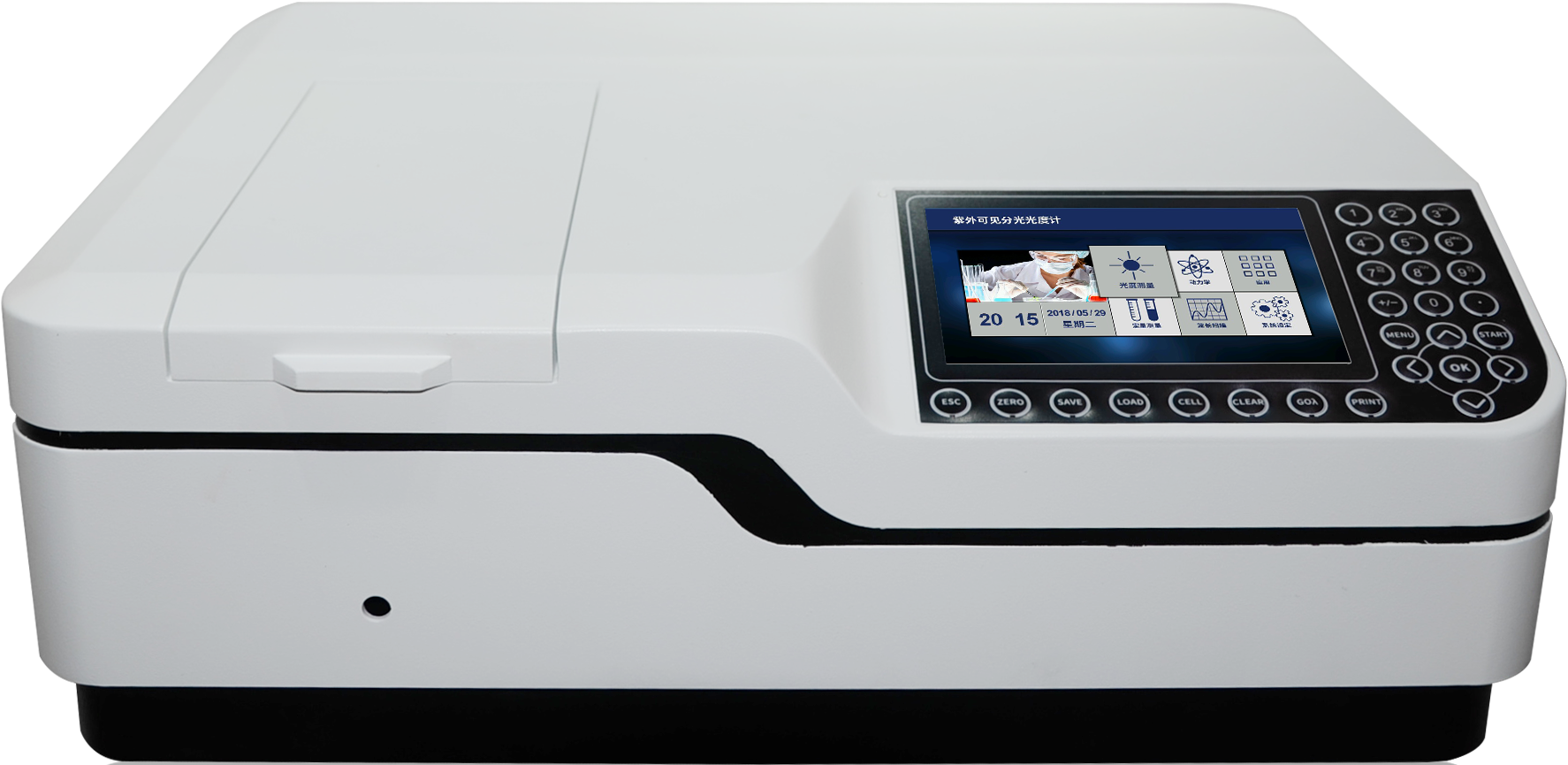
Spectrometer T Series Features:
- 7-inch color screen, Windows graphical interface, intuitive operation.
- Versatile testing: photometric, quantitative, kinetic, spectral scanning, DNA/protein testing, etc.
- Large capacity storage, memory 1024M, can save test data and curves.
- USB support, data can be transferred and exported to Excel for analysis.
- The lamp tube (deuterium lamp/tungsten lamp) can be replaced, no optical adjustment is required, and the lamp can be easily replaced.
- Large sample chamber, suitable for 5-100mm cuvettes.
- Rich accessories: automatic 8-strip rack, membrane rack, test tube rack, cooling system, built-in printer, etc., support 21 CFR standard software.

T Series